Kyle Andrews, MD Call 419-291-3858

Fixing what’s broken. Replacing what’s worn out.

I'm a board-certified orthopaedic trauma surgeon in Toledo. I repair broken bones in patients of every age, replace worn-out hips and knees, and fix replacements that aren't working. This site explains each one in plain language so you know what you're deciding.

What brings you here?

Already had surgery? See common concerns after surgery.

What I treat

Surgery is rarely the first step. For each problem below, here is what it tends to feel like, what we try first, and when an operation starts to make sense.

Hip arthritis

Pain in the groin, the front of the thigh, or the buttock. Stiffness after sitting. Trouble putting on socks or getting out of a car.

Arthritis wears away the smooth cartilage that lets the ball of the hip glide in its socket. X-rays show how much is left. How much it bothers you matters more than how the X-ray looks.

What we try first

  • Anti-inflammatory medicine, if it is safe for you
  • Physical therapy and low-impact exercise such as cycling or swimming
  • Weight loss, which lowers the load on the joint
  • A cane in the opposite hand

When hip replacement makes sense

When pain limits walking, sleep, or work despite those steps, and X-rays confirm advanced arthritis. In a hip replacement, the worn ball and socket are replaced with metal, ceramic, and plastic parts.

The anterior, muscle-sparing approach

I offer hip replacement through the front of the hip. This approach works between the muscles instead of detaching them from the bone. Whether it is the right approach for you depends on your build, your bone, and any earlier surgery, and we decide that together.

Knee arthritis

Aching with stairs and long walks. Swelling at the end of the day. A knee that bows, knocks inward, or buckles.

Knee arthritis usually comes on slowly over years. Many people manage it well for a long time without surgery.

What we try first

  • Strengthening the thigh muscles with physical therapy
  • Anti-inflammatory medicine or gels, if they are safe for you
  • Weight loss
  • A brace or a cane for longer distances
  • Injections for flare-ups

When knee replacement makes sense

When the pain is there most days, the X-rays show bone rubbing on bone, and the steps above no longer hold. Knee replacement resurfaces the worn ends of the bones with metal and a plastic spacer. Depending on where the wear is, that can be the whole knee or one part of it.

The quad-sparing approach

I offer knee replacement through an approach that avoids cutting the quadriceps tendon, the tendon that straightens the knee. It is not suited to every knee, so we decide based on yours.

A replacement that isn't right

Pain that never went away, or pain that came back years later. A joint that feels loose, clunks, swells, or stays stiff.

Most joint replacements work well for a long time. When one does not, the first job is to find out why. Operating again without a clear cause rarely helps.

Common causes

  • An implant that has come loose from the bone
  • Infection, which can show up early or years later
  • Instability, where the joint shifts or dislocates
  • Worn plastic
  • Stiffness from scar tissue
  • A break in the bone around the implant
  • Pain coming from somewhere else, such as the back

What a second opinion visit involves

We go through the history of your joint, examine it, and take new X-rays. Blood tests, a sample of joint fluid, or other scans may follow. Revision surgery, where some or all of the parts are replaced, is recommended only when we know what it would fix. Roughly four in ten of my joint replacement operations are revisions.

What helps to bring

  • The operative report from your original surgery
  • The implant record (a sheet of stickers the hospital keeps)
  • Older X-rays, so we can see what has changed over time

Your original surgeon's office or hospital can release these to you.

Broken bones

Fractures anywhere in the body, from infants to older adults. Foot and ankle injuries. Breaks around an existing hip or knee replacement.

Fracture care is the core of my training. Many breaks heal well in a cast, a boot, or a sling, and I will tell you when surgery would not add anything.

When a fracture needs surgery

  • The pieces have shifted and will not heal straight on their own
  • The break runs into a joint, such as the ankle, knee, or hip
  • The bone has come through the skin
  • Holding the bone steady would let you move sooner and more safely

The repair may use screws, a plate, or a rod inside the bone. Where it is safe, I use smaller incisions that disturb less of the muscle and skin around the break.

Hip fractures

Most hip fractures need surgery, usually within a day or two, so you can get out of bed and moving. Depending on where the break is, that may be a repair or a partial or full hip replacement.

Breaks around an implant

A break around a hip or knee replacement takes both skill sets, fixing the bone and sometimes revising the implant in the same operation.

If you think you have broken a bone, go to an emergency department. Do not wait for an office visit.

Bone infection and limbs at risk

A wound that drains or will not close. Pain, redness, or swelling over a bone, sometimes long after an injury or operation.

Infection in a bone is called osteomyelitis. It can follow a fracture that broke the skin, an earlier operation, or a long-standing wound. It rarely clears with antibiotics alone.

How it is treated

  • Surgery to remove the infected bone and tissue
  • Samples sent to the lab to match the antibiotic to the infection
  • Antibiotics for several weeks, guided by an infectious disease doctor
  • Rebuilding the bone and covering the wound, sometimes over more than one operation

Limb salvage

When a severe injury or infection puts an arm or leg at risk, the goal is to save a limb that works. That is not always possible, and sometimes an amputation gives a better result than a limb that stays painful. We will talk honestly about both.

Traumatic wounds

Deep wounds from an injury often involve the bone, tendons, or joint underneath. They are cleaned in the operating room and closed or covered once the tissue is healthy.

Sacroiliac (SI) joint pain

Pain low in the back or in the buttock, usually on one side. Worse when sitting for long, standing up from a chair, or climbing stairs.

The SI joints connect the base of the spine to the pelvis. Pain from this joint is often mistaken for a back or hip problem, so the first step is confirming where the pain comes from.

What we try first

  • Physical therapy
  • Anti-inflammatory medicine, if it is safe for you
  • A support belt worn around the pelvis
  • An injection into the joint, which also helps confirm the diagnosis

When SI joint fusion makes sense

When an injection confirms the joint as the source and the pain keeps returning. Fusion is done through a small incision, placing implants across the joint to hold it still. I use the iFuse TORQ implant system.

What recovery looks like

The question I hear most is "when will I be back to normal?" Choose an operation, then step through the months.

  1. Day of surgery

    You stand and take your first steps with a walker and a therapist, usually within hours. Most of our patients go home the same day.

  2. The first two weeks

    You walk around the house with a walker, a little farther each day. Swelling and bruising in the thigh are normal. You keep the incision clean and dry and take aspirin or another blood thinner to help prevent blood clots.

  3. Weeks two to six

    Most people move from a walker to a cane, then to nothing. Driving usually returns in this window, once you are off prescription pain medicine and can brake hard without hesitating.

  4. Six weeks to three months

    Everyday life is mostly back: shopping, desk work, longer walks. Strength and stamina are still catching up, so tiredness at the end of the day is expected.

  5. Three months to a year

    You return to golf, cycling, swimming, hiking, and travel. The hip keeps getting stronger for up to a year. Many people stop noticing it.

These are typical timelines, not promises. Your own plan depends on your health, your bone, and what was done in the operating room.

Common concerns after surgery

Most worries in the first weeks turn out to be a normal part of healing, and most do not need an emergency room. Here is what to expect, what helps at home, and when to call.

Call us first. We know your surgery and can often sort out a problem by phone or with a same-week office visit. The emergency room is for the short list below. The same number works day and night.

For a question that can wait until the next working day, send us a MyChart message. You can attach a photo of your incision so we can see what you are seeing. For anything urgent, call instead.

Call 911 right away for

  • Shortness of breath or trouble breathing
  • Chest pain
  • Fainting, or sudden confusion

These can be signs of a blood clot in the lung or a heart problem. Do not wait to see if they pass, and do not call the office first.

Swelling and bruising

What is normal

Swelling is expected for weeks after any bone or joint surgery, and sometimes for several months. It is usually worse at the end of the day. Bruising can spread well away from the incision, down toward the hand or foot, and turn purple, then yellow.

What helps

  • Rest with the arm or leg raised above the level of your heart several times a day
  • Ice for about 20 minutes at a time, with a cloth between the ice and your skin
  • Move your fingers or toes, and pump your ankles up and down, often
  • After leg surgery, take short, frequent walks instead of one long one
  • Wear compression stockings if you were given them

Call the office if

  • Pain or tenderness in the calf
  • Swelling that does not go down overnight with the limb raised
  • Swelling that suddenly gets much worse
  • A hand or foot that turns pale, cold, or blue
  • A cast or splint that feels too tight
Preventing blood clots

Our usual plan

Surgery on a leg raises the risk of a blood clot for several weeks. Most of our patients take aspirin 81 mg twice a day for four weeks after joint replacement or fracture surgery.

If you already take a blood thinner, such as warfarin, Eliquis, Xarelto, or Plavix, your plan will be different. We will tell you exactly when to restart it. For some patients that is right away, and for others it is 48 hours after surgery.

What helps

  • Take the medicine on your discharge papers every day for the full course
  • Do not add aspirin to another blood thinner unless we told you to
  • Walk several times a day
  • Pump your ankles up and down often
  • Drink plenty of fluids

Call the office if

  • You are not sure which medicine to take, or when to restart your usual blood thinner
  • You have pain, tenderness, or new swelling in the calf
  • You have a nosebleed or bleeding gums that will not stop
  • Your stools are black or bloody
  • Aspirin upsets your stomach
Bleeding and drainage from the incision

What is normal

A small amount of blood or clear, pink, or yellow fluid on the dressing is common in the first few days. Blood thinners can make this last a little longer.

What helps

  • Leave the dressing in place as you were instructed
  • Keep the incision clean and dry
  • If a spot is oozing, press firmly on it with a clean cloth for 10 minutes
  • Rest and raise the arm or leg

Call the office if

  • Drainage that soaks through the dressing
  • Drainage that continues or returns after the first several days
  • Fluid that is thick, cloudy, or smells bad
  • Redness that spreads away from the incision
  • The edges of the incision pulling apart
Fever

What is normal

A raised temperature in the first few days is common. You may have been told that 100.4°F is a fever. After surgery, a reading around that level usually comes from the lungs not opening fully after anesthesia and bed rest, not from infection.

What helps

  • Take 10 slow, deep breaths and cough every hour you are awake
  • Use the breathing device (incentive spirometer) if you were given one
  • Get out of bed and walk
  • Drink plenty of fluids

Call the office if

  • You are worried about your temperature, whatever the number. Call us before you call another doctor or go to the emergency room.
  • You have shaking chills
  • A fever starts more than a week after surgery
  • You have a fever and the wound is getting redder or draining
Nausea and vomiting

What is normal

Nausea is common for the first day or two. Anesthesia and opioid pain medicine are the usual causes.

What helps

  • Take pain medicine with food
  • Eat small, plain meals and sip fluids often
  • Use the anti-nausea medicine if one was prescribed
  • Take less opioid medicine as your pain allows

Call the office if

  • You cannot keep down fluids or your medicines
  • Your belly is swollen and painful
  • You vomit blood or material that looks like coffee grounds. Go to an emergency department.
Constipation

What is normal

Almost everyone on opioid pain medicine gets constipated. Less activity and less fluid add to it.

What helps

  • Drink water through the day
  • Eat fruit, vegetables, and fiber
  • Walk as much as you are allowed
  • Take the stool softener or laxative as directed
  • Take less opioid medicine as your pain allows

Call the office if

  • No bowel movement for several days despite these steps
  • Belly pain, bloating, or vomiting
Pain

What is normal

Pain is expected and is usually worst in the first two weeks. It is often worse at night and after therapy.

What helps

  • Take your pain medicines as prescribed, and do not wait until the pain is severe
  • Use ice and raise the arm or leg
  • Change position often
  • Time a dose before therapy sessions

Call the office if

  • Pain that suddenly gets much worse
  • Pain that your prescribed medicine does not control
  • A pop or a fall followed by new pain, or not being able to use the arm or put weight on the leg
  • After a hip replacement, a leg that looks shorter or turned to one side
Dizziness and feeling light-headed

What is normal

Common in the first few days. Pain medicine, drinking less, and blood loss during surgery all contribute.

What helps

  • Sit on the edge of the bed for a minute before standing
  • Drink fluids and eat regular meals
  • Have someone nearby when you first get up

Call the office if

  • You faint
  • Dizziness that does not settle with rest and fluids
Numbness, warmth, and clicking

What is normal

A patch of numb skin beside the incision is normal and often permanent. The area around the surgery can feel warm for months. A joint replacement can click when you move it.

What helps

  • These usually need no treatment
  • Ice can ease warmth after activity

Call the office if

  • New numbness, tingling, or weakness in the hand or foot
  • You cannot move your fingers, or lift your foot or toes
Trouble passing urine

What is normal

Anesthesia and pain medicine can make it hard to empty the bladder for the first day or so.

What helps

  • Drink fluids
  • Walk to the bathroom instead of using a bedpan when you can
  • Take your time

Call the office if

  • You feel the need to go but cannot
  • Burning, or urine that is cloudy or bloody
Trouble sleeping

What is normal

Poor sleep is very common for the first several weeks after surgery.

What helps

  • Take pain medicine before bed as prescribed
  • Ice the area before sleep
  • Keep a regular bedtime and limit daytime naps

Call the office if

  • Lack of sleep is wearing you down. Tell us at your next visit or call.

Office: 419-291-3858. Not urgent? Message us on MyChart.

Nights and weekends: call the same number. Your call is forwarded to the after-hours call center, which reaches the physician on call.

This is general guidance. The instructions you were given at discharge come first if they differ.

Getting ready for surgery

The weeks before surgery affect the weeks after. Tick these off as you go, or print the list.

Your health

Your home

Your medicines before and after surgery

Do not stop any medicine on your own. Some need to be paused before surgery and restarted on a set day afterward. The timing is different for each person, and we will give you a written plan.

Tell us if you take any of these, because they usually need a plan:

  • Blood thinners and anti-clotting medicines, such as warfarin, Eliquis, Xarelto, Plavix, or daily aspirin
  • Diabetes and weight-loss medicines, including insulin, Ozempic, Wegovy, Mounjaro, Jardiance, and Farxiga
  • Medicines for rheumatoid arthritis, psoriasis, lupus, or other immune conditions
  • Steroids, such as prednisone
  • Anti-inflammatory pain medicines, such as ibuprofen, naproxen, or meloxicam
  • Hormone therapy or birth control containing estrogen
  • Suboxone, buprenorphine, methadone, or naltrexone
  • Vitamins, herbal products, and supplements, such as fish oil, vitamin E, turmeric, ginkgo, and garlic pills

Bring every bottle, or a complete list with doses, to your visit before surgery. If you are not sure whether to take something, message us on MyChart or call before you skip a dose.

Where you go after the hospital

Most of our hip and knee replacement patients go home the same day as their surgery and do well there. After a fracture or a bigger operation, some need more help first. The hospital's therapists and case manager help you choose, and your insurance has to approve anything other than home.

Home
You can walk safely with a walker and have someone to help for the first few days. You go to a therapy clinic for physical therapy.
Home with home health care
A nurse and a physical therapist visit you at home a few times a week. This suits people who cannot easily get to a clinic yet.
Inpatient rehabilitation
A short stay in a rehab hospital with about three hours of therapy a day. It is for people who need intensive therapy and can keep up with it. Insurance rules are strict.
Skilled nursing facility
A stay with nursing care around the clock and a lighter therapy schedule. It is for people who are not yet safe at home and are not ready for intensive rehab.

Think about this before surgery. Who can stay with you? Are there stairs to get in or to reach a bedroom and bathroom? Tell us your plan so there are no surprises on the day you leave.

Nothing you tick here is saved or sent anywhere.

Common questions

How long does a joint replacement last?

Most hip and knee replacements last 15 to 20 years, and many last longer. How long yours lasts depends on your age, your activity, and your weight.

Am I too young or too old?

There is no age cutoff. The decision rests on how much the joint limits your life and whether you are healthy enough for surgery. Younger patients should know they may need a revision later in life.

How long will I be in the hospital?

For a first hip or knee replacement, most of our patients go home the same day as surgery. Some stay one night for medical reasons. Revision surgery and fracture surgery usually mean a longer stay.

How much pain should I expect?

The first two weeks are the hardest, especially after a knee replacement. We use several kinds of medicine together so that you need as little opioid medicine as possible, for as short a time as possible.

When can I drive?

Usually between two and six weeks. You must be off prescription pain medicine and able to brake hard without hesitation. It often takes longer when the right leg was operated on.

When can I go back to work?

Desk work is often possible within two to six weeks. Jobs with heavy lifting, climbing, or long hours standing usually take about three months.

What are the risks?

Serious problems are uncommon, but they happen. They include infection, blood clots, dislocation of a hip, stiffness of a knee, a fracture, nerve injury, and the need for more surgery. We will go over the risks that apply to you before you decide.

What about dental work?

Avoid elective dental work, including routine cleanings, in the three months before or after your joint replacement. For the first year after surgery, take an antibiotic before any dental work. Call the office and we will prescribe it. After the first year, you do not need antibiotics for dental work. If you have a dental emergency at any point, call us.

Will my joint set off airport metal detectors?

It often will. Tell the security officer you have a joint replacement. You do not need a card or a letter.

What activities are off limits afterward?

Walking, cycling, swimming, golf, and doubles tennis are all encouraged. Running and jumping sports put more wear on the implant, so talk with me before going back to them.

Kyle Andrews, MD, in a navy suit and red plaid tie

About Dr. Andrews

I'm an orthopaedic trauma surgeon, certified by the American Board of Orthopaedic Surgery (ABOS). I did my residency in Toledo, completed a fellowship in orthopaedic trauma at the University of Florida, and came back here to practice, caring for patients of every age, from infants to older adults. About half of my practice is fracture and injury care. The other half is hip and knee replacement, including revision surgery for replacements that have failed.

I treat every patient the way I would want a member of my own family treated, whatever their background or circumstances.

I am an Assistant Professor of Orthopaedic Surgery at the University of Toledo and teach in its residency program, which means explaining my reasoning out loud every day. I do the same with patients, and I want you to tell me plainly what worries you. You should leave a visit knowing what is wrong, what your choices are, and what I would do in your position.

  • Board certified, American Board of Orthopaedic Surgery (ABOS)
  • Fellowship in orthopaedic trauma, University of Florida
  • Residency in orthopaedic surgery, University of Toledo
  • Doctor of Medicine, Florida State University College of Medicine
  • Bachelor of Science in Biology, Florida State University
  • Assistant Professor of Orthopaedic Surgery, University of Toledo
  • Operates at ProMedica Toledo Hospital and ProMedica Flower Hospital

Dr. Andrews's ProMedica profile

Research and publications

I have written or co-written 28 articles in medical journals and one textbook chapter. Much of this work is on fractures, hip and knee replacement, and problems after surgery, the same things I treat every day.

These are written for other doctors. They are listed here, newest first, for anyone who wants to look them up.

See all 28 journal articles
  1. Drees SM, Nair A, Swigart P, Unver L, Yatsonsky D, Andrews KA. Use of the IlluminOss implant for treating a pathologic humeral fracture in a patient with renal cell carcinoma metastasis: a case report. J Orthop Case Rep. 2025;15(10):126-130.
  2. Nair A, Alexander JS, Bench C, Yatsonsky D, Andrews K. Intra-articular steroid hip injections association with fracture: a case series. J Orthop Case Rep. 2025;15(8):87-90.
  3. Pasquinelly A, Andrews K. Profunda femoris pseudoaneurysm and fatal hemorrhage 2 weeks after modified Girdlestone resection arthroplasty: a case report. JBJS Case Connect. 2024. doi:10.2106/JBJS.CC.23.00302
  4. Georgiadis G, Andrews K, Redfern R. Gunshot fracture of the femoral neck: treatment with internal fixation and immediate proximal femoral valgus osteotomy. A case report. JBJS Case Connect. 2021;11:e20.01009.
  5. Liu J, Pathak G, Joshi M, Andrews K, Lee J. A meta-analysis comparing the outcomes of syndesmotic injury treated with metal screw, dynamic fixation, and bioabsorbable screw. J Orthop. 2021;25:82-87.
  6. Andrews K, Wynkoop E, Stokey P, Georgiadis G. Impending atypical femur fracture presenting as painful total knee arthroplasty. JBJS Case Connect. 2020;10(1):e0160.
  7. Andrews K, Jain M, Schwind J, Mooney M, Stokey P, Stirling B, Mustapha AA, Skie M. Smoking increases risk of symptomatic nonunion after four-corner arthrodesis. World J Surg Surg Res. 2019;2:1177.
  8. O’Reily O, Andrews K, Siparsky P. Understanding the glenoid avulsion of the glenohumeral ligaments as a cause of anterior shoulder instability: a case example to illustrate surgical and postsurgical management. Arthrosc Tech. 2019;8(10):e1152-e1158.
  9. Mooney M, Andrews K, Rowland A, Jain M, Mustapha A, Skie M. Clinical outcomes of combined surgical treatment of medial epicondylitis and cubital tunnel syndrome. Hand Surg Rehabil. 2019;S2468-1229(19)30093-3.
  10. Andrews K, Gillette M, Shah R, Mckean L, Sanford C. Type IV tibial tubercle fracture, Salter-Harris type II variant: case report and review of the literature. J Surg Case Rep. 2019;2019(7):rjz209.
  11. Andrews K, Rowland A, Stirton J, Elgafy H. Fracture of allograft interbody spacer resulting in post-operative radiculopathy: a case report. World J Orthop. 2019;10(4):206-211.
  12. Andrews K, Rowland A, Tank J. Knee locked in flexion: incarcerated semitendinosus tendon about proximal tibial osteochondroma. J Surg Case Rep. 2019;2019(2):rjy346.
  13. Elgafy H, Raberding C, Mooney M, Andrews K, Duggan J. Analysis of a ten step protocol to decrease postoperative spinal wound infections. World J Orthop. 2018;9(11):271-284.
  14. Bowman J, Curnutte B, Andrews K, Stirton J, Ebraheim N, Mustapha AA. Lateral intermuscular septum as cause of radial nerve compression: case report and review of the literature. J Surg Case Rep. 2018;2018(8):rjy226.
  15. Andrews K, Rowland A, Pranjal A, Ebraheim N. Cubital tunnel syndrome: anatomy, clinical presentation, and management. J Orthop. 2018;15(3):832-836.
  16. Yglesias B, Andrews K, Hamilton R, Lea J, Shah R, Ebraheim N. Case report: irreducible medial subtalar dislocation with incarcerated anterior talar head fracture in a young patient. J Surg Case Rep. 2018;2018(7):rjy168.
  17. Sefcik R, Andrews K, Stirton J, Lea J, Tanios M, Skie M. A case report of an isolated dislocation of the scaphoid in a lesser arc injury and a review of the literature. Case Rep Orthop. 2018;2018:9591502.
  18. Krebs C, Tranovich M, Andrews K, Ebraheim N. The medial patellofemoral ligament: review of the literature. J Orthop. 2018;15(2):596-599.
  19. Gagnet P, Kern K, Andrews K, Elgafy H, Ebraheim N. Spondylolysis and spondylolisthesis: a review of the literature. J Orthop. 2018;15(2):404-407.
  20. Willen J, Mooney M, Andrews K, Ebraheim N. The glenohumeral ligaments: anatomy, clinical presentation, and review of the literature. J Orthop Ther. 2018;JORT-189.
  21. Ebraheim N, Stirton J, Andrews K, Lu A. Loss of anteversion in left-sided hemiarthroplasty with the use of modular threaded inserters. J Trauma Rehabil. 2018;1:1.
  22. Andrews K, Lu A, Mckean L, Ebraheim N. Review: medial collateral ligament injuries. J Orthop. 2017;14(4):550-554.
  23. Andrews K, Sefcik R, Stirton J, Ebraheim N. Case report: minimally invasive open reduction and internal fixation of a humeral head-splitting fracture-dislocation in a young man. J Orthop Ther. 2017;JORT-157.
  24. Ebraheim N, Liu J, Steiner R, Andrews K, Mckean L, Stirton J. Bilateral tibia stress fractures: case report and review of the literature. J Trauma Treat. 2017;6:3.
  25. Andrews K, Mckean L, Shendge V. Complex total hip arthroplasty in a young patient with previous acetabulum fracture and exposed intra-articular hardware: a case report and review of the literature. Am J Orthop Traumatol. 2017;2(1):1-6.
  26. Ebraheim N, Andrews K, Stirling B, Tanios M. Piriformis syndrome or true sciatica: are they the same or different? MOJ Orthop Rheumatol. 2017;9(3):00357.
  27. Ebraheim N, Whaley J, Stirton J, Hamilton R, Andrews K. Femoral triangle anatomy: review, surgical application, and novel mnemonic. J Orthop Ther. 2017;JORT-139.
  28. Ebraheim N, Andrews K, Tanios M. Sacroiliac joint dysfunction. MOJ Orthop Rheumatol. 2017;8(3):00311.

Book chapter

Andrews K, Mooney M, Wynkoop E, Skie M. Pre-operative planning and preparation. In: Antoci V, Eltorai A, eds. Outlines in Orthopaedic Surgery. 2019:1-6.

The team you will meet

Good surgery is a team effort. These are the people who will see you in the office, answer your calls, and look after you before and after an operation.

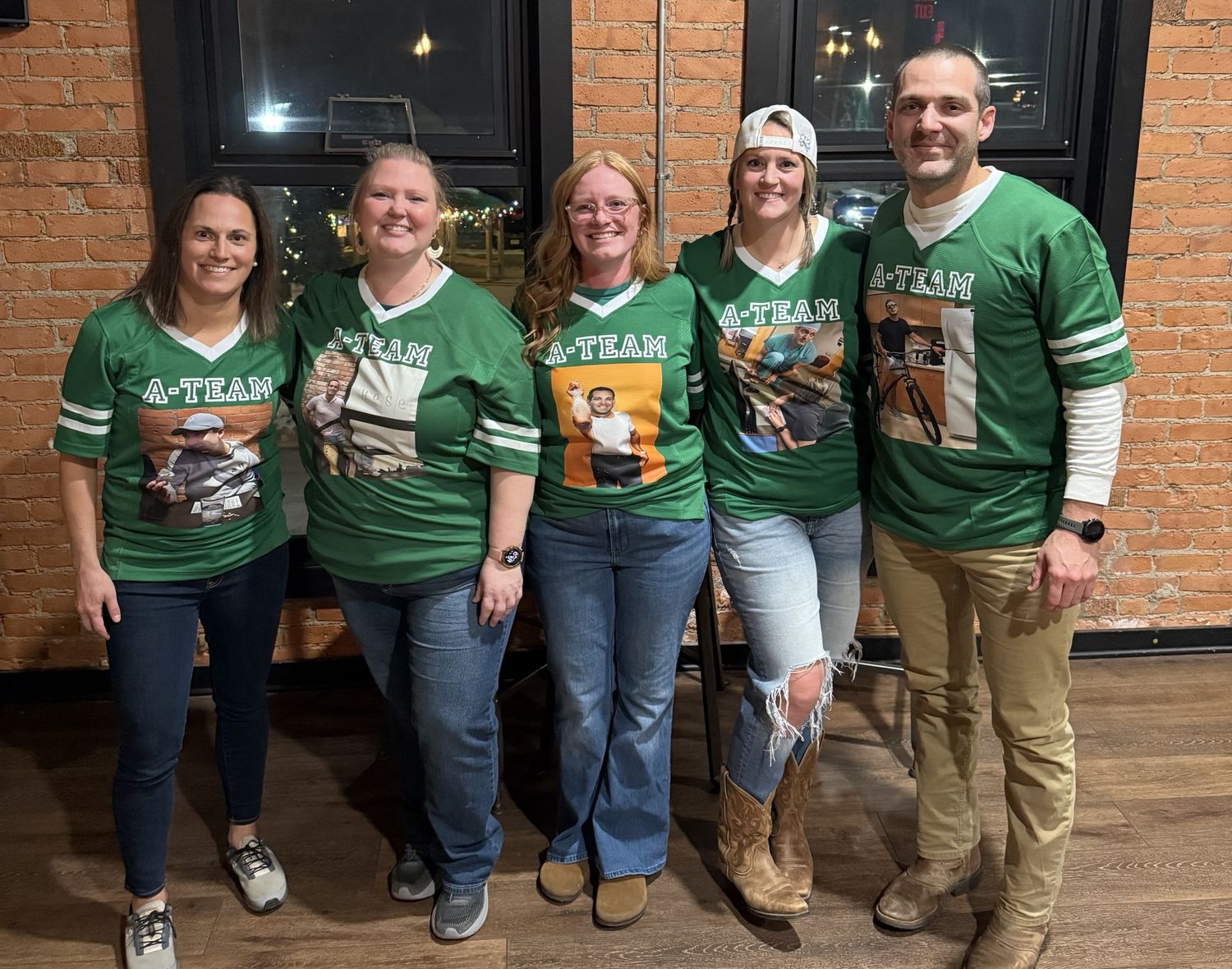
Meghan, Candas, Paige, Christine, and Dr. Andrews standing together in matching green A-Team jerseys
The A-Team, off the clock. From left: Meghan, Candas, Paige, Christine, and Dr. Andrews.

What a physician assistant does

A physician assistant (PA-C) is a licensed medical provider who works alongside me. Meghan and Christine see patients in the office, assist in the operating room, and check on patients in the hospital. When you see one of them, your care is still planned with me.

What our nurses do

Candas and Paige are usually the first people you reach when you call. They answer questions about medicines, wounds, and recovery, and help arrange surgery, tests, and paperwork.

Residents on our team

We are a teaching service. Residents from the University of Toledo orthopaedic surgery program often work with us. They are doctors who have finished medical school and are training to become orthopaedic surgeons. You may meet one in the office, in the hospital, or in the operating room. They work under my supervision, and I remain responsible for your care.

Make an appointment

New appointments are made by phone. The office staff can tell you whether you need a referral and what your insurance covers.

419-291-3858

After hours, the same number forwards to our call center and the physician on call.

I see patients in the office two days a week. One phone number books both.

Mondays at Toledo Hospital

2121 Hughes Drive, Suite 310
Toledo, OH 43606
Get directions to the Toledo Hospital office

Wednesdays at Flower Hospital

5300 Harroun Road, Suite 118
Sylvania, OH 43560
Get directions to the Flower Hospital office

Parking and finding us

  1. From Harroun Road, turn in at the hospital's Main Entrance.
  2. Park in lot P1, the lot marked for physician offices.
  3. Walk into Medical Office Building I. It is building 3 on the campus signs.
  4. We are in Suite 118.

Message us on MyChart

MyChart is the best way to reach us when it is not urgent. Your message goes straight into your chart, where my team and I can see it alongside your X-rays and notes.

  • Ask a question about your recovery or your medicines
  • Send a photo of your incision
  • Request a refill or an appointment
  • See your test results and visit notes

Sign in to MyChart

We read messages during office hours. Not signed up yet? Ask us at your visit and we will help you set it up.

What to bring to a first visit

  • Your insurance card and a photo ID
  • A list of your medicines
  • X-rays or scans done elsewhere, on a disc if you have one
  • For a replacement that isn't right, the records listed above
  • Shorts or loose pants, so the joint can be examined
  • A family member or friend, if you would like a second set of ears

Already had surgery and something does not seem right? See common concerns after surgery.

Call 419-291-3858